
Recruiter’s Perspective: 4 Interview Red Flags That Can Help You Avoid a Toxic Workplace
Pay attention to the signs. They’re there for a reason.

As harsh as it sounds, we spend the majority of our lives working.
And especially when we work for someone else (for a company), having a healthy working environment is absolutely essential. A healthy workplace doesn’t necessarily mean being best friends with colleagues or having a team that would “fight for each other” every day.
From my experience, a healthy workplace simply means you like going there.
You feel motivated, you want to learn, you have energy, you don’t dread Mondays, and you feel supported in what you do.
And this feeling is not always about what your job actually is — but how you feel at work.
Are you surrounded by people who treat you with respect?
Is it normal to ask questions and seek advice?
Does your employer listen to your opinion?
Do you feel safe?
Everyone has their own metrics for what a “good workplace” is. But most of us can agree on what a toxic work environment looks like:
It’s simply a place you don’t want to go.
It drains your energy, makes you stressed, and slowly wears you down. Sometimes you wake up thinking: “I can’t do this anymore. I don’t want to go there.”
And very often, you later realise there were signs during your interview. Tiny details you noticed but ignored because you were excited about getting the job.
Let’s look at 4 of these interview red flags that may be signs of a toxic workplace. Encountering one should make you alert. Experiencing all of them? You should run from that interview as fast as possible.
1. Lack of Respect Toward You as a Candidate
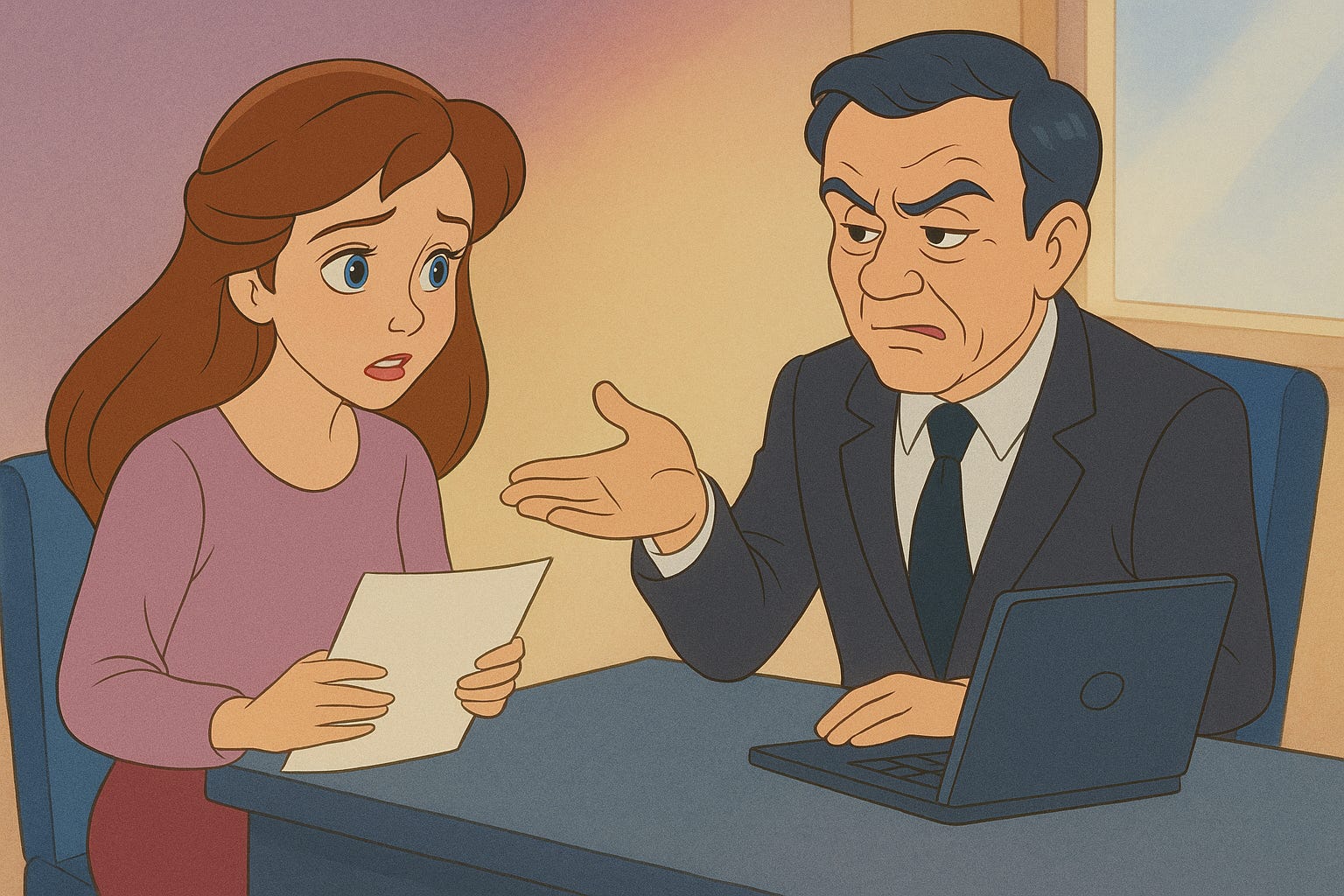
You might think you’re the “weaker” side in the process. That the company chooses, and therefore you should expect to be treated “from above.”
But in companies with a healthy culture, this is simply not true.
The interview process is a two-way street — a dialogue where both parties choose each other. There is supply and demand on both sides.
So if you notice that the interviewer:
is arrogant
comes late without an apology (and leaves you waiting)
is clearly unprepared and hasn’t read your CV
doesn’t turn on their camera (while you’re expected to be on video)
appears disinterested, checks emails, scrolls their phone, eats, or talks to someone offscreen during your interview
…then this is not the dream job you applied for.
You might say: “But what if only the interviewer is toxic, and the rest of the company is great?”
My answer is: “Would you want to work in a place where arrogance is tolerated in the first place?”
A toxic environment doesn’t mean every employee is toxic.
It means toxic behaviour is allowed — and that alone influences the entire workplace.
2. Unclear Role Responsibilities and Scope
I’ve written before about companies that don’t know who they need, and how this “shaping a role while hiring” often leads to rejecting excellent candidates.
But here’s the more dangerous side of that situation:
When you join a company that cannot (or doesn’t want to) clearly define expectations, you risk stepping into a chaotic nightmare — a job where you are responsible for everything and nothing at the same time.
Without boundaries, structure, or clarity, your entire workload depends on what someone tells you to do at any given moment. This often signals a toxic work environment where managers clash, decision-making is unclear and responsibility is passed around like a hot potato.
In an interview, you can spot this when:
answers about the job responsibilities are very vague or generic
the interviewer cannot explain team structure or reporting lines
the role itself seems confused (“You will do something, but we still need to shape what exactly”)
the interviewer becomes irritated when you ask about role scope and tells you that “this will be discussed later in the process”
A lack of clarity is not a small issue, it’s a serious interview red flag.
3. Overuse of the Word “Family”
I’m not entirely sure why so many corporations feel the urge to act like they are running a family business.
Maybe because “family-like culture” sounds warm and comforting. A cozy place where everyone supports each other and works together on something meaningful.
And it sounds great, however, it’s often not applicable to the corporate world.
Interestingly, I have observed that the more a company promotes that “we are one big family,” the worse the actual culture is.
Great companies don’t hide behind the “family” curtain.
They clearly define their values, their processes, their benefits and how they support their employees.
Such companies simply say: “We have great people working here.”
No imaginary “family” needed.
So if, when you ask about company culture, the interviewer repeats:
“We are like a family.”
“We love spending time together, like a family.”
“We’re all so united and supportive — like a family.”
…and the company is not a family business, take it as a warning.
Ask for concrete examples of how this culture appears in everyday work.
And then decide for yourself whether you believe it or not.
4. A Job Advertised Repeatedly After It’s “Closed”
Turnover is one of the easiest ways how to detect whether your future workplace is a place to stay or a place to escape.
However, companies rarely share their turnover numbers unless they are exceptionally low. So you have to look for other signs.
One of them could be: a role that keeps being advertised and closed multiple times throughout the year.
This could mean:
someone joined and left during the trial period (quite a normal situation)
the company is expanding headcount
or… no one stays long because the workplace is toxic
So don’t hesitate to ask:
“Why did the role open?”
“Why did the previous person leave?”
“Why has the position been advertised several times this year?”
Some companies will be honest about their struggles — and honesty is a wonderful sign.
Some will give you a long, generic, corporate answer that says nothing (certain managers excel at this.)
And some will refuse to give you any explanation at all — which is a major interview red flag.
The Hiring Process Is a Window Into the Company
I like to say that the hiring process is a window into how a company truly works.
But even when processes are messy, unoptimised, or chaotic — it doesn’t always mean the company is toxic.
But the behaviour during the interview tells you everything you need to know.
Disrespect. Arrogance. Vague answers. Lack of transparency. Cheap selling points. Half-truths.
These are the real interview red flags revealing a toxic workplace.
The interview stage is not just about the company choosing you — it’s also about you choosing them.
So pay attention to the signs. They’re there for a reason.